The Prepared Pantry: How to Store Emergency Food for Maximum Shelf Life

In an unpredictable world, preparing an emergency food supply is a fundamental step toward self-sufficiency and peace of mind. A well-stocked pantry is a vital hedge against natural disasters, economic uncertainty, or prolonged utility outages. However, simply buying bulk food is only half the battle. The true challenge, and the key to protecting your investment, lies in proper long-term storage. Food is a perishable asset, and without adhering to specific environmental standards and packaging techniques, its nutritional value and palatability will degrade rapidly, rendering your carefully planned supply useless when you need it most. Extending the shelf life of emergency food for decades requires understanding its four greatest enemies: oxygen, moisture, light, and temperature.
The goal of long-term Survival Food for Emergencies – Augason Farms is to create an environment that minimizes the chemical and microbial processes that cause spoilage. By controlling these four elements, you can create a safe, stable, and surprisingly durable food supply that will be ready to sustain you and your family when conventional supply chains break down.
Enemy Number One: Temperature Control
Temperature is the most critical factor affecting the longevity of stored food. Heat drastically accelerates the chemical degradation of food, causing fats to turn rancid, vitamins to break down, and flavor profiles to diminish. Storing food in a consistently cool environment is paramount.
The gold standard for long-term food storage is a constant temperature of 50 to 60 degrees Fahrenheit (10 to 15 degrees Celsius). For every 10-degree Fahrenheit increase in storage temperature above this ideal, the shelf life of many dry goods can be cut in half. Basements, interior closets away from exterior walls, or dedicated climate-controlled storage rooms are excellent locations. You must avoid storing food in attics, garages, or sheds, where temperatures fluctuate wildly and often spike well above 90 degrees in the summer, effectively destroying the nutritional value of your food within a few months. Consistency is key; large temperature swings are almost as damaging as sustained heat.
The Moisture Threat: Keeping It Dry
Moisture is the catalyst for mold, bacterial growth, and chemical reactions that lead to spoilage. For dry goods like grains, beans, and flours, the goal is to maintain moisture content below 10 percent.
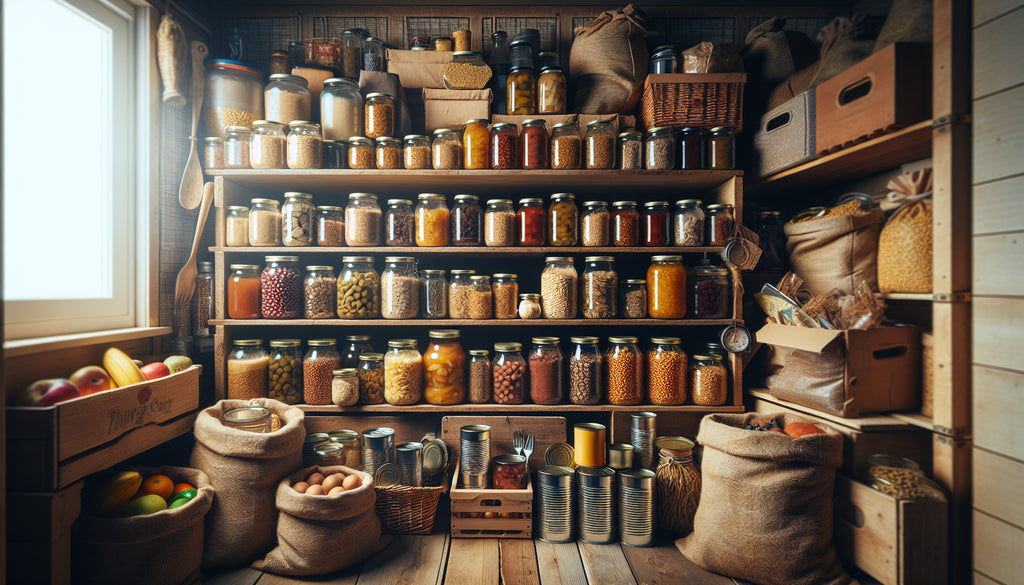
The storage area itself must be kept dry. Basements prone to dampness should utilize dehumidifiers or moisture barriers. Never store food directly on a concrete floor, as concrete can wick moisture from the ground. Instead, use shelving or place wooden pallets beneath containers to allow for air circulation and prevent condensation. The food packaging itself must also be moisture-proof. Original paper or cardboard containers are inadequate for long-term storage. Everything should be transferred to air- and water-tight containers.
The Role of Rotation: First In, First Out (FIFO)
Even with perfect storage conditions, all food has a shelf life, and the system is not truly secure without a rotation plan. The First In, First Out (FIFO) principle is vital. The food you purchase today should be the last food you consume from the storage, and the oldest food should be integrated into your daily meals.
To facilitate rotation, label everything clearly and immediately. Use permanent markers to write the date of packaging (or purchase date), the contents, and the recommended “use-by” date directly on both the Mylar bag and the exterior of the bucket. Place the newest buckets at the back of the storage area and move the older buckets to the front. Regular inventory checks—perhaps once every six months—allow you to monitor the stock, update your records, and pull approaching-expiry items into your normal kitchen rotation. This prevents waste and ensures your emergency supply is always fresh.
Conclusion: Protecting Your Preparedness
Storing emergency food is a practical application of basic science. By viewing your food supply as an asset that must be shielded from the ravages of oxygen, heat, light, and moisture, you invest not just in food, but in resilience. Through meticulous packaging with Mylar and oxygen absorbers, storage in a cool, dark environment, and a disciplined FIFO rotation schedule, you create a prepared pantry that can truly stand the test of time, ensuring the safety and sustenance of your family when it matters most.